
The Do's and Don'ts for Screening Process Factors–Solving Alias Challenges
This is part 2 of an adaption from Mark Anderson’s 2023 YouTube webinar, "Do's & Don'ts for Screening Process Factors."
Salvaging a Resolution III design
The first situation is when you violate the advice in our previous blog post and run a resolution III design for screening. Recall that a key assumption for screening is that you anticipate important factors will present a statistically significant main effect. But with a resolution III design, each main effect is aliased with one or more two-factor interactions. So if there are actually interactions present in the system, some or all of the main effects identified will be incorrect. Remember that screening with a resolution IV design keeps us away from this problem by aliasing main effects only with highly unlikely three-factor interactions.
If you didn’t know better and deployed a resolution III design for screening: no worries, resolve the issue by using a foldover design. This design augmentation doubles the original run count in a way that de-aliases the main effects from two factor interactions. The second block of data reverses every factor level (plus to minus and minus to plus) from the original design.
Let’s look at an 11-factor, resolution III, 16-run design for example. The alias structure is shown in Table 1 (interactions involving three factors or more not shown).
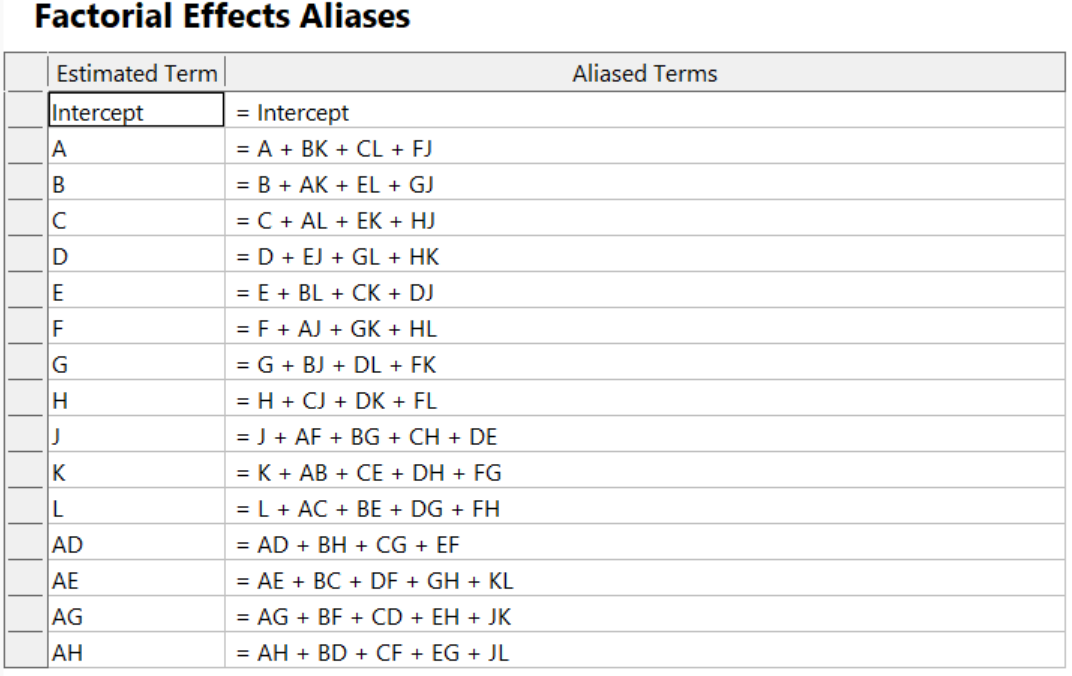
Table 1. Starting alias structure for 11-factor resolution III design
Notice that each main effect is aliased with multiple two-factor interactions.
By augmenting this bad design with a foldover (see Figure 1), you can de-alias the main effects from the two-factor interactions.
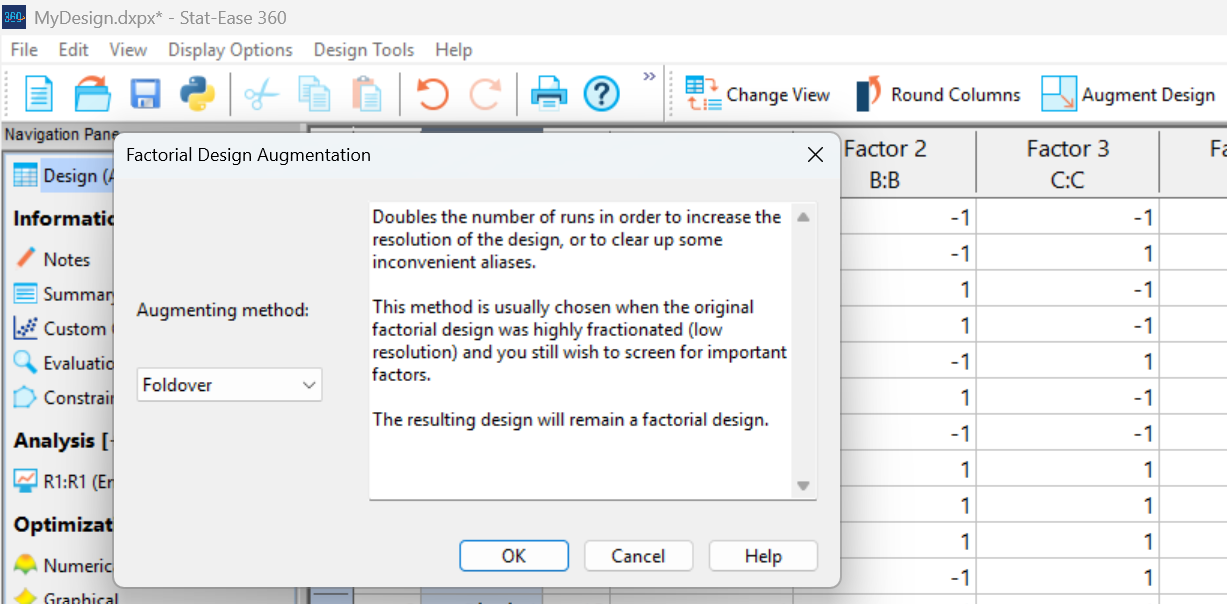
Figure 1: Using Stat-Ease software’s augmentation to do a foldover
The new runs are put in a second block. This structure removes any shift in response that may occur from when you ran the first experiment, such as an increase or decrease due to differing ambient conditions.
Table 2 shows the new, improved, alias structure.
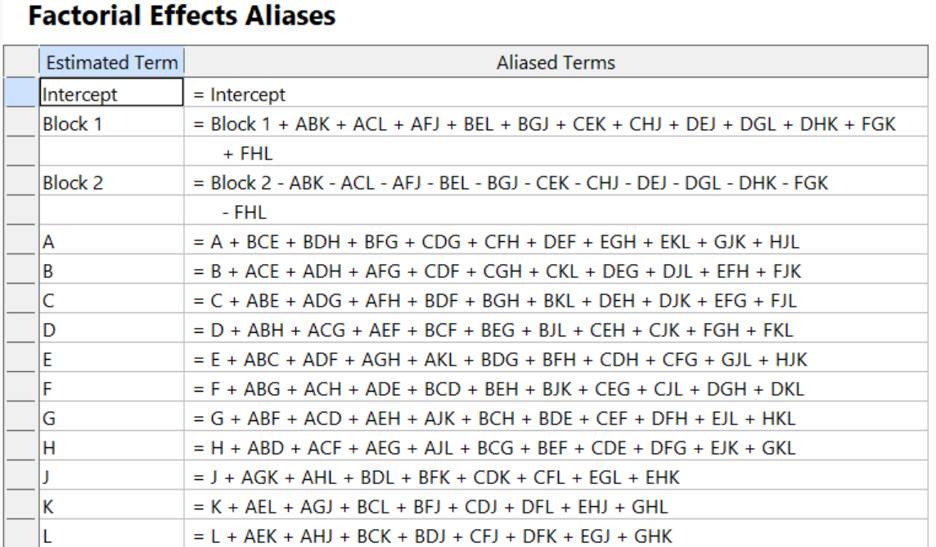
Table 2: Alias structure after the foldover
Note that it took 32 runs to get to the point where it’s confident that the main effects are properly assessed. It would have been far better off to start with a minimum-run screening design for 11 factors, requiring only 24 runs (including 2 runs to bolster it against outliers). However, in our scenario, this would be wishful thinking, since we cannot go back in time. Consider the foldover in this case to be a design repair to achieve the resolution IV needed to safely screen factors down to a vital few for further investigation.
Foldover augmentation also works to de-alias Plackett-Burman designs. Handy!